Understanding education as the single most important development tool, as explained by the Aga Khans.
Throughout their extensive reigns as the hereditary imams of the Shia Imami Ismaili Muslims, both the Aga Khans laid immense focus on establishing extensive and elaborate educational networks

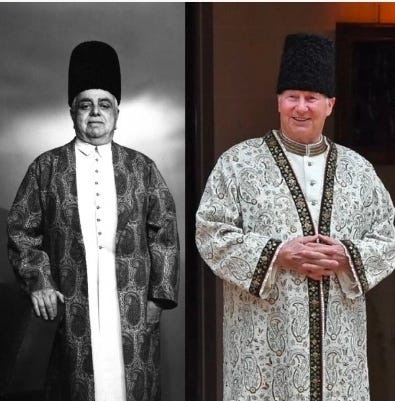
By Mehroz Siraj Rupani
The Burning Issue
Throughout daily public debates, many people come up with different ideas about how the developing world can get on the pathway to development.
The general arguments are always about the ideas of establishing infrastructure facilities and creating jobs for the masses while establishing political stability.
Amidst all those arguments, it often gets missed out that the most important development tool at humanity’s disposal in recent centuries has been a quality education.
We should aspire to develop a clear understanding around the idea that a strong focus on good quality education at all levels is the only way in which modern day nation states in the global south can ensure strong multi-generational socioeconomic and political development.
This concept is best witnessed by viewing the global work of the Aga Khan Development Network (AKDN) in the field of educational development and establishing its correlations to the views and ideas that were espoused by Prince Karim Aga Khan IV and his grandfather, Sir Sultan Mohammed Shah Aga Khan III.
Throughout their extensive reigns as the hereditary imams of the Shia Imami Ismaili Muslims, both the Aga Khans laid immense focus on establishing extensive and elaborate educational networks and institutions that covered all aspects of formal education from early childhood development to postgraduate research studies.
These institutions include the Aga Khan Universities (AKU) and the network of Aga Khan schools that are spread across South Asia and Eastern Africa.
Another notable achievement that should be mentioned here is the pioneering role played by the Aligarh movement.
At the onset of the 20th century, Muslim political activism across British India was peaking up. This was well reflected in the creation of the All-India Muslim League that had elected Sir Sultan Mohammed Shah Aga Khan as its founding president.
At the top of Sir Aga Khan’s list of priorities was the political and economic upliftment of British India’s Muslim minorities.
This task could not be achieved without undertaking massive educational reforms that required amongst other things, a world class Muslim university which would not only impart a top quality education to Muslim students in the sciences and humanities, but would also be very well reflective about the core Islamic teaching of utilising education as a bridge to bring communities closer with the aim of ensuring collective national socioeconomic development.
Sir Aga Khan had personally undertaken the task of spearheading the Aligarh movement which was aimed at converting the Mohammadan Anglo Oriental (MAO) College in Aligarh India, into a professional university.
This was achieved in 1920 after a decades long painstaking fund raising effort that was personally headed by Sir Aga Khan.
Staying true to its founding ethos, the Aligarh Muslim University soon after became the launching pad of the Pakistan Movement, which under the dynamic leadership of Quaid-E-Azam (Great Leader) Mohammed Ali Jinnah demanded a separate Muslim state from within British India after the Second World War.
Until the 1960s, a the vast majority of Pakistan’s top level ruling elite and the bureaucracy that came into formation after the country's creation in 1947, were all Aligarh educated.
There is an impeccable amount of data and research available today that demonstrates that strong investments and focuses on education at all levels can create multi-generational economic development across the developing world.
Sir Aga Khan’s own views reflected these thoughts very well indeed.
“If our people take to science and scientific education in the right spirit, the industrial and economic future of our community will no longer be in doubt,” Sir Aga Khan remarked at the All-India Mohammed Educational Conference in New Delhi on December 04 1911.
What he meant by this was to convey the idea that by making more investments in acquiring a top quality scientific education, which would have also included social sciences, the Muslims of India in general and his Ismaili community in particular, could continue to attain high levels of socioeconomic development for many generations to come.
These solid guidelines have proven to be almost universally true time and again in multiple societies and nation-states around the world.
While it is unfortunate that Pakistan, India and the African societies did not follow up on these declared guidances of Sir Aga Khan, the western world and societies such as Japan and China were able to put in place those very same ideas into implementation and the jury now is out there for all the world to see.
Europe and Japan were fully devastated at the end of the Second World War and they had to rebuild themselves from scratch.
While they did work on infrastructure projects such as the ones covered under the Marshall Plan, their primary focus shifted drastically towards educational reforms.
Under the proposals of the Langevin-Wallen Plan, the French drastically changed their education system to one that formalised a more democratized and secularized system that placed great focus on humanities and the sciences at all educational levels.
The result of this investment was that over a few decades after WWII, the French economy became one of the largest export based economies in Europe that had also keenly advanced its global footprints in subjects such as Sociology.
Much like France, Germany and Japan had also incorporated many of the ideals originally espoused by Sir Aga Khan in their postwar educational redevelopment.
Although under strict US influence, those countries also democratized and secularized their education systems that were cleansed out of their old nationalistic propagandas.
Their newly evolving systems made education free for most of their citizens and they prioritized the education of their young girls as well and made heavy generational investments into scientific education, as originally explained by Sir Aga Khan.
As a result of these investments, Germany and Japan are now the biggest exporters of reliable cars around the world.
These cars have basically wiped out the American automotive industry internationally.
Their rise as two of the world’s major economies also allowed them to lift tens of millions of their citizens out of poverty and move them towards a future where they can tackle the challenges of artificial intelligence, global pandemics and climate change with confidence and knowledge.
Sir Sultan Mohammed Shah Aga Khan III passed away on July 11th 1957, after passing the mantle of Ismaili Imamate to his grandson, Prince Karim Aga Khan IV, who further built up on the foundations of building knowledge based economic institutions globally.
Prince Karim Aga Khan had to deal with the early challenges brought forth by the massive postwar decolonization in Asia and Africa and the ensuing conflicts that affected Ismaili and other communities worldwide.
He, just like his grandfather, remained fully astute in the vision for ensuring multi-generational socioeconomic and political development via extensive investments in high quality long-term education.
This is best understood when we study about the deep economic impacts that the Aga Khan University (AKU) has had on the economy and the education systems of Pakistan.
A 2018 report by the American consultancy firm Centennial Group mentioned that the AKU’s direct contributions to the country's economy were valued at US$1billion. The university also helped sustain over 42,000 jobs in the local economy that year.
The report also mentioned that for every single rupee that the University contributed in direct value to the society, it created a ripple benefit across the Pakistani economy worth over seven rupees. This is largely due to the entire network of supply chains that the University’s business model supports directly and indirectly.
Despite this economic prowess, it should not be forgotten here that the core basic workings of the AKU are still very much about being a world class educational and academic research institution that also provides world class health care services.
It should however be mentioned here that despite the resounding success of the university in Pakistan, the country has so far remained economically backwards due to the corrupt and dysfunctional nature of its administrations over the last 79 years.
It has been politically convenient for the country's ruling elites and the governments to keep the masses uneducated and unqualified so that political control could be easily maintained.
Prince Karim Aga Khan was a strong proponent of inculcating responsible use of modern technologies and the best available artificial intelligence models into modern education systems from a very early age.
This, he believed, would equip and empower the youth of today to deal with the needed tools and education to overcome the challenges and turbulences of the future.
The Chinese had wholeheartedly accepted this concept and their education systems have subsequently moved forward into the 21st century at warp speed.
Educational reforms in China were one of Deng Xiaoping’s massive major achievements onwards from the late 1970s.
When the Chinese decided to liberalise their economy and society, their viewpoint was that a strong and well developed education system that combined formal theoretical education with the needs of a modern scientific economy should be established.
This was very much yet another practical interpretation of the ideas of the Aga Khans but in an Asian context.
In a recent report in The News International, Pakistani researcher Dr Hasnain Nawaz reported that thanks to an early adoption of artificial intelligence based models, China’s education systems have been able to produce large numbers of well qualified technology professionals who are now building everything from virtual science labs to advanced robotics.
None of this happened by chance. It happened due to the innovative policy planning that was undertaken under the Deng Xiaoping era.
The policies were based on the idea that China’s industrial and manufacturing push could not be sustained in the absence of a concurrent push to generate more high quality human talents.
This was to be done via consistent and targeted investments in developing technology assisted pedagogies that would equip Chinese students and workers with the knowledge and the tools that were required in order to deal with the challenges of the 21st Century.
While addressing a gathering in the city of Osh, in the Kyrgyz Republic on October 30th 2002, Prince Karim Aga Khan said, “I have come to the conclusion that there is no greater form of preparation for change than education. I also think that there is no better investment that the individual, parents, and the nation can make than an investment in education of the highest possible quality.”
These investments simultaneously require ongoing efforts into diligent policy making that can only be done by policy makers who work hard and honestly for the socioeconomic and political development of their own people, just like the Aga Khans have done for over a century.
The writer is an independent journalist, researcher and the editor of The Burning Issue. He can be reached at mehrozrupani@gmail.com
Excellent work well executed and well worth the read.